


Can Same-Sex Couples File a Family Petition in the United States?

For many same-sex couples, one of the first questions that comes up when considering an immigration process is simple: Can my spouse petition for me to obtain permanent residence in the United States if we are a same-sex couple?
The answer is yes. U.S. immigration law recognizes legally valid same-sex marriages for immigration purposes. USCIS generally applies the same rule to determine the validity of a same-sex marriage as it does for marriages between different-sex couples: what matters is whether the marriage was legally valid in the place where it was celebrated.
However, knowing that a family petition is possible is only the first step.
How the relationship is documented, where the marriage took place, the foreign spouse's immigration history, the situation of any children, and, in some cases, the country where the consular interview will take place can have an important impact on the case.
At De Maio Law, we have represented same-sex couples, including Cuban families in South Florida, in immigration matters that require much more than simply filing a form. Below, we explain the main immigration options and some of the issues that may arise during the process.
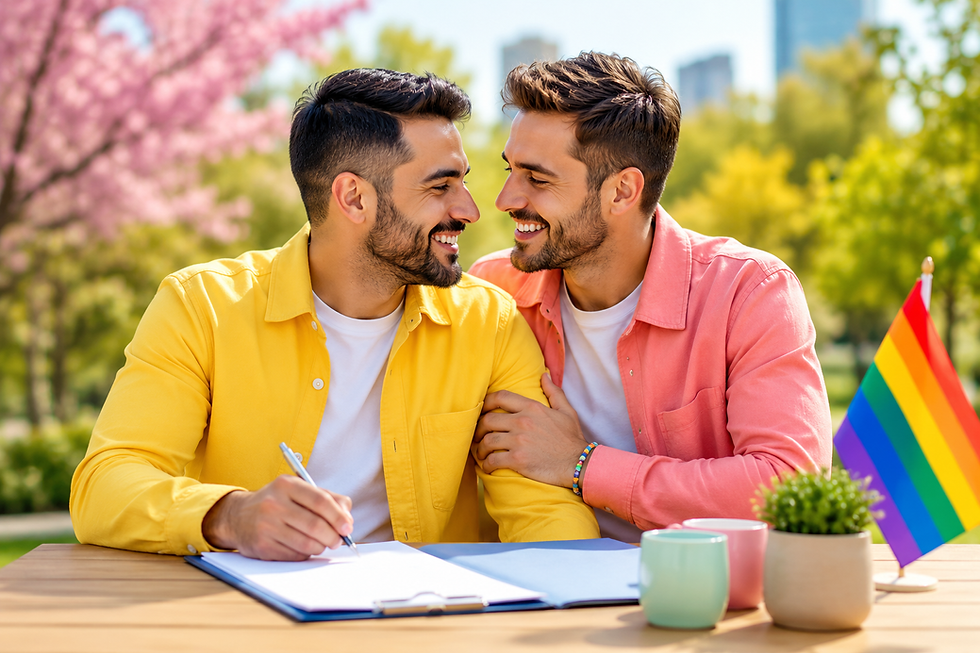
The Short Answer: Yes, Same-Sex Couples Can File a Family Petition
A U.S. citizen or lawful permanent resident may file a family petition for a same-sex spouse as long as the marriage is legally valid and the other immigration requirements are met.
The U.S. Department of State confirms that same-sex spouses of U.S. citizens and lawful permanent residents are eligible for the same immigration benefits as different-sex spouses.
USCIS recognizes same-sex marriages under the same general rule it applies to other marriages. In general, the validity of a marriage is determined under the law of the place where the marriage was celebrated, commonly referred to as the "place of celebration" rule.
For example, if a couple legally married in a U.S. state or another country where same-sex marriage was legally recognized, the fact that they later live in a jurisdiction that does not recognize their marriage does not necessarily affect the marriage's validity for U.S. immigration purposes.
However, this does not mean that every case is the same. The required documentation and appropriate legal strategy can vary significantly depending on the couple's history and individual circumstances.
How Did the Law Change for Same-Sex Couples?
The federal recognition of same-sex marriages for immigration purposes resulted from several important decisions by the U.S. Supreme Court.
United States v. Windsor and the End of DOMA
Before 2013, the Defense of Marriage Act, commonly known as DOMA, prevented the federal government from recognizing same-sex marriages for many federal purposes.
This directly affected immigration. A U.S. citizen could not obtain the same immigration benefits for a same-sex spouse that were available to a different-sex spouse.
In 2013, the Supreme Court decided United States v. Windsor, holding Section 3 of DOMA unconstitutional.
Following that decision, the federal government began recognizing same-sex marriages for immigration purposes.
Obergefell v. Hodges and Marriage Equality
In 2015, the Supreme Court decided Obergefell v. Hodges, recognizing the constitutional right of same-sex couples to marry.
These decisions transformed the legal landscape for LGBTQ+ couples and removed significant barriers that had previously prevented their marriages from being recognized for immigration purposes.
Today, a same-sex marriage may serve as the basis for immigration benefits when it meets the applicable legal requirements.
What Does the "Place of Celebration" Rule Mean?
This rule is particularly important for couples who married outside the United States.
In general, USCIS looks at whether the marriage was legally valid in the place where it was celebrated, rather than simply whether the jurisdiction where the couple currently lives recognizes the marriage.
For example, a couple may have legally married in a country that recognizes same-sex marriage and later moved to a country where their marriage is not locally recognized.
For U.S. immigration purposes, the fact that the marriage is not recognized where the couple currently lives does not automatically mean that USCIS will refuse to recognize it. The general rule is to evaluate the law of the place where the marriage was celebrated.
What Are the Main Immigration Options for Same-Sex Couples?
Once the marriage is legally valid, the immigration options available are generally the same as those available to other married couples.
Form I-130 for a Spouse
If the couple is already married, a U.S. citizen or lawful permanent resident may file Form I-130, Petition for Alien Relative, on behalf of their spouse.
The Department of State explains that the first step for a foreign spouse of a U.S. citizen seeking an immigrant visa is generally the filing of Form I-130 with USCIS.
The I-130 is not, by itself, a Green Card. Its purpose is to establish the qualifying family relationship that serves as the basis for the immigration process.
Depending on where the foreign spouse is located and their immigration circumstances, the next step may involve adjustment of status in the United States or consular processing outside the United States.
K-1 Fiancé(e) Visa
If the couple is not yet married, a U.S. citizen may, under certain circumstances, file a petition for a K-1 visa for their foreign fiancé(e).
This option is also available to same-sex couples. A same-sex relationship may serve as the basis for a K-1 petition when the other requirements are met.
The K-1 visa allows the foreign fiancé(e) to travel to the United States for the purpose of getting married within the period established by law.
Among other requirements, the couple generally must have met in person within the two years before filing the petition, unless an exception applies.
Adjustment of Status or Consular Processing
The location of the foreign spouse is one of the factors that determines how the immigration process will continue.
If the foreign spouse is in the United States and meets the applicable requirements, there may be a pathway to adjustment of status and obtain permanent residence without leaving the country.
If the foreign spouse is outside the United States, the process will generally continue through consular processing after the appropriate petition is approved and the case moves forward with the Department of State.
The Department of State confirms that same-sex spouses may receive the same immigration benefits as different-sex spouses during the consular process.
The best option, however, depends on the individual's immigration history and particular circumstances.
The Real Challenge: Proving a Bona Fide Marriage
The fact that a marriage is legally valid does not automatically mean that USCIS will approve the case.
For a marriage-based immigration petition, one of the fundamental requirements is demonstrating that the relationship is bona fide, meaning that the marriage is genuine and was not entered into primarily for the purpose of obtaining an immigration benefit.
USCIS may consider different types of evidence when evaluating the relationship.
Examples may include:
Joint bank accounts.
Joint leases or other evidence of shared housing.
Insurance policies.
Photographs and trips taken together.
Correspondence and communications.
Shared financial documents.
Evidence of living together.
Photographs with family members and friends.
Statements from people who know the couple.
Evidence of significant events shared throughout the relationship.
However, a particular challenge can arise for some same-sex couples.
When the Relationship Had to Be Kept Private
Not every couple has had the freedom to live their relationship publicly.
A couple may have spent years without posting photographs together, introducing their partner to certain family members, or maintaining joint accounts and other shared documents.
This can happen because of safety concerns, discrimination, family pressure, or restrictive laws in the country of origin.
The issue arises when a couple submits an immigration case to USCIS and has less "traditional" relationship evidence than other couples may be able to provide.
The absence of public photographs or joint accounts does not necessarily mean that the marriage is not genuine.
What matters is being able to explain why that evidence does not exist and provide other evidence that demonstrates the actual history of the relationship.
For example, private communications maintained over the years, photographs with trusted friends or family members, travel records, evidence of visits, sworn statements, and other documents may help establish the timeline and authenticity of the relationship.
The goal is not simply to submit a large quantity of documents. The goal is to present evidence that makes sense within the couple's particular history.
What If the Couple Married in Another Country?
This is a relatively common situation.
Some same-sex couples travel to another country or another U.S. state to legally marry and later return to their place of residence.
In these situations, it is important to keep documentation showing where and when the marriage took place, including the marriage certificate and, when appropriate, evidence related to the trip.
If the marriage was legally celebrated in the applicable jurisdiction, USCIS will generally apply the place-of-celebration rule when determining its validity for immigration purposes.
However, each case should be reviewed individually because other legal requirements may affect eligibility for an immigration benefit.
What Happens to the Children of a Same-Sex Couple?
Families formed by same-sex couples may include biological children, adopted children, stepchildren, or children born through assisted reproductive technology or surrogacy.
Each child's immigration situation should be evaluated separately.
For example, it may be necessary to determine whether a child acquired U.S. citizenship at birth, qualifies as a child or stepchild for immigration purposes, or requires a separate petition.
Having children does not prevent a couple from filing a marriage-based petition, but it may create additional legal issues that should be evaluated at the beginning of the process.
For this reason, a family should not assume that resolving the spouse's immigration petition automatically resolves the immigration status of all children.
What If the Consular Process Takes Place in a Country Where Being LGBTQ+ Presents a Risk?
Another situation that may require additional planning occurs when the foreign spouse must attend a consular interview in a country where same-sex relationships are criminalized or where there is a significant risk of discrimination or persecution.
In these situations, in addition to reviewing the immigration requirements, it may be important to consider the practical and safety circumstances surrounding the consular process.
The Department of State provides that visa applications based on same-sex marriages are adjudicated in the same manner as applications based on different-sex marriages.
When particularly sensitive circumstances exist, the process should be carefully planned before the application is filed, rather than after a problem arises.
The Florida and Miami Factor: Same-Sex Couples and Cuban Families
South Florida presents particular circumstances because of its large immigrant community and, especially, its significant Cuban population in Miami and surrounding areas.
For a Cuban same-sex couple, a marriage-based family petition may interact with other provisions of U.S. immigration law, including those related to the Cuban Adjustment Act, depending on the individual's circumstances.
This means that it may not be enough to analyze only the marriage-based petition.
It may also be necessary to review the foreign spouse's immigration history, date and manner of entry into the United States, physical presence, previous immigration applications, and any other factors that could affect eligibility for permanent residence.
At De Maio Law, with offices in Coral Gables, Florida, we represent clients throughout South Florida and other parts of the United States in family-based immigration matters and other immigration cases that require individualized legal analysis.
Common Mistakes That Can Complicate a Family Petition
Although same-sex marriage is recognized for immigration purposes, certain mistakes can result in delays, Requests for Evidence, or other complications during the process.
1. Providing Insufficient Evidence of the Relationship
A copy of the marriage certificate establishes that the marriage legally exists, but it may not be enough to demonstrate that the relationship is genuine.
2. Failing to Explain the Lack of Public Evidence
If the couple had to keep their relationship private, it is important to explain why rather than leaving the officer with a file that simply contains limited evidence.
3. Ignoring the Foreign Spouse's Immigration History
A person may have previous immigration issues that affect their eligibility to adjust status or obtain an immigrant visa.
Before filing an application, it is therefore important to review entries and departures, prior visas, periods of authorized stay, previous applications, and any potential inadmissibility issues.
4. Assuming Marriage Automatically Resolves All Immigration Problems
Marriage can create an immigration pathway, but it does not automatically eliminate every possible immigration barrier.
Each case must be evaluated based on its individual facts.
5. Failing to Properly Prepare for the Interview
When USCIS or a consulate requires an interview, both spouses should be prepared to explain the history of their relationship clearly and consistently.
Preparation does not mean memorizing answers. It means understanding what information is relevant and being able to honestly explain the history of the relationship.
Frequently Asked Questions About Immigration for Same-Sex Couples
1️⃣ Does my same-sex marriage need to be registered in my country of origin?
Not necessarily.
For immigration purposes, USCIS generally applies the place-of-celebration rule. In general, what matters is whether the marriage was legally valid in the place where it was celebrated.
If the country where the couple currently lives does not recognize the marriage, that does not automatically mean that USCIS will also refuse to recognize it.
2️⃣ What evidence can I provide if I kept my relationship private?
You can provide alternative evidence that helps demonstrate the history and authenticity of the relationship.
Depending on the circumstances, this may include communications, private photographs, travel records, evidence of visits, statements from family members or friends, and other documents showing that the relationship existed before the marriage and continued afterward.
The most important consideration is to credibly explain why certain public evidence does not exist.
3️⃣ Can my spouse adjust status if they entered the United States with a tourist visa?
In some cases, yes.
A lawful entry into the United States may allow a person to be eligible for adjustment of status, but other requirements and potential issues must also be considered.
How the person obtained their visa, their immigration history, current status, and the circumstances surrounding the marriage may all be relevant.
For this reason, it is not advisable to file an adjustment of status application based solely on being married to a U.S. citizen.
4️⃣ What happens if my consulate is in a country where being a same-sex couple is illegal?
The marriage may still be recognized for U.S. immigration purposes if it meets the applicable requirements.
However, the consular process may present additional practical considerations. Depending on the circumstances, it may be necessary to carefully evaluate where and how the consular processing will take place and what specific risks may exist.
5️⃣ Does assisted reproduction or adoption affect the spouse's family petition?
The way a family was formed does not, by itself, invalidate a marriage-based petition.
However, the immigration status of the children may require a separate analysis, particularly when adoption, assisted reproductive technology, surrogacy, or biological parentage issues are involved.
6️⃣ Are processing times different for same-sex marriages?
USCIS does not have a separate processing category simply because a marriage is between people of the same sex.
Processing times can vary depending on the type of case, the office handling the case, workload, and other circumstances.
A delay or Request for Evidence does not necessarily mean that USCIS is treating the case differently because the couple is same-sex.
7️⃣ How can the Cuban Adjustment Act affect a same-sex Cuban couple?
It may be relevant in certain cases.
A Cuban national who also has a marriage-based family petition may have additional or different immigration options depending on their immigration history and the specific requirements of the Cuban Adjustment Act.
The interaction between these processes should be individually analyzed before deciding which immigration strategy is most appropriate.
Conclusion
Same-sex couples have access to the principal family-based immigration pathways available to other legally recognized married couples. USCIS generally recognizes same-sex marriages under the place-of-celebration rule, and same-sex spouses of U.S. citizens and lawful permanent residents may receive the same immigration benefits available to different-sex spouses.
But legal recognition of the marriage is only the beginning.
For some couples, the real challenge is demonstrating the authenticity of a relationship that may have been kept private, properly documenting a marriage celebrated in another country, analyzing the foreign spouse's immigration history, or coordinating the immigration status of children.
That is why, before filing a family petition, it is important to look at the complete immigration picture—not just the marriage certificate.
Do You Need Help With a Marriage-Based Family Petition?
Is your relationship genuine to the people who know you, but are you concerned that it may not appear as clear to an immigration officer who has never met you?
At De Maio Law, we understand that every couple has a different story. Our goal is to help build a case that presents that story clearly, in an organized manner, and with a strong legal foundation.
If you or your spouse are considering filing a family petition, our team can evaluate your circumstances and explain the available options before you begin the process.
📍 301 Almeria Ave, Suite 330, Coral Gables, FL 33134
📞 (786) 232-9120
💬 WhatsApp: (786) 440-1672
Author

Viktor De Maio
Viktor De Maio is the founding attorney of De Maio Law PLLC, an immigration law firm based in Coral Gables, Florida. His practice focuses on family-based immigration, employment-based immigration, immigration defense, and other matters before U.S. immigration authorities.
Legal Disclaimer
This article is provided for informational and educational purposes only and does not constitute legal advice or create an attorney-client relationship. Immigration laws and policies may change, and eligibility depends on the specific facts and circumstances of each case. For legal advice regarding your individual situation, consult a licensed immigration attorney.


Comments